High precision CNC spinning technology plays a crucial role in various industries. It offers outstanding accuracy and efficiency, making it a preferred choice for manufacturers. According to a report by IBISWorld, industries that rely heavily on CNC spinning include aerospace, automotive, and medical device manufacturing. These sectors require component parts that meet tight tolerances and rigorous quality standards.
What industries rely most on high precision CNC spinning technology? The aerospace industry demands precision for safety-critical components, like turbine blades. Similarly, the automotive sector uses CNC spinning for producing lightweight parts that enhance vehicle performance. In healthcare, medical equipment manufacturing depends on precision to ensure patient safety.
These sectors report significant growth, and the demand for CNC technology is expected to increase. However, challenges remain. Not all manufacturers adapt quickly to advanced CNC spinning capabilities. The technology can present a steep learning curve for new users. Continuous investment in training and equipment is essential to keep pace with industry standards. Establishing a balance between technology and skilled labor remains a pressing concern.
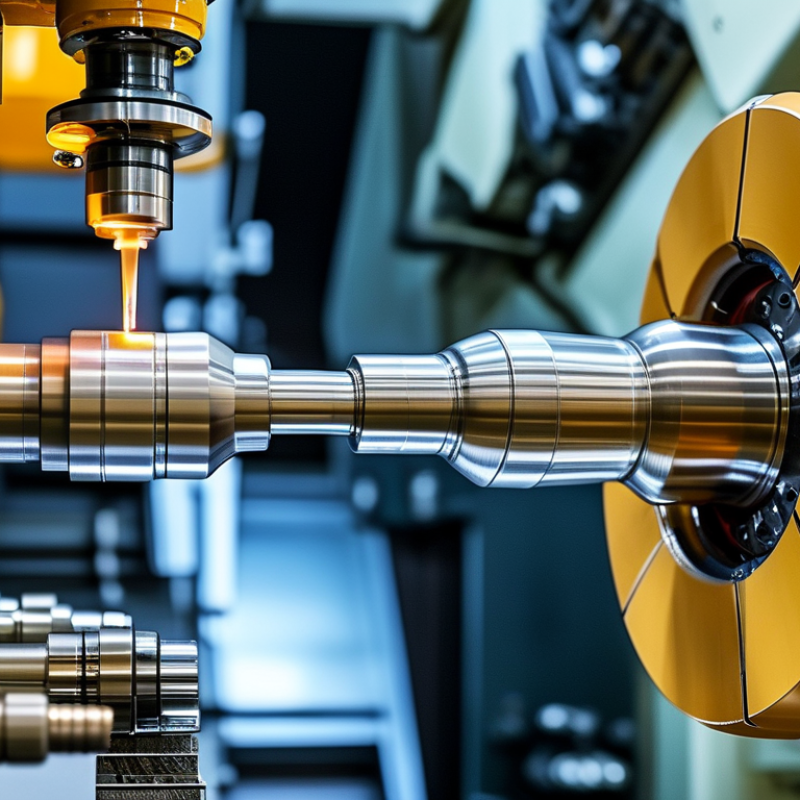
Benefits of High Precision CNC Spinning Technology in Modern Industries
High precision CNC spinning technology has transformed various industries. This technology offers remarkable flexibility, producing parts with intricate designs and tight tolerances. It is essential for sectors such as aerospace, automotive, and medical devices. Precision is the backbone of these industries, where even minor errors can have severe consequences.
One notable benefit is the reduction of waste. By utilizing advanced CNC techniques, manufacturers can minimize material usage. This efficiency not only cuts costs but also aligns with sustainable practices. High precision enables the creation of lightweight components, a crucial factor for improving fuel efficiency in vehicles. However, the implementation of this technology can be expensive, posing challenges for small businesses.
Another advantage is faster production times. High precision CNC spinning allows for quicker iterations and adjustments. This speed can still lead to potential quality control issues. Sometimes, manufacturers face difficulties in maintaining precision over longer production runs. Nonetheless, the ability to adapt and innovate remains a vital aspect of modern manufacturing practices. Embracing high precision CNC spinning is a step towards resilience in a competitive landscape.
Key Applications of CNC Spinning in Manufacturing Processes
CNC spinning technology plays a vital role in modern manufacturing. Industries rely on its precision for various applications. It allows the production of complex shapes with high accuracy. Data from industry reports indicate that CNC spinning can achieve tolerances as tight as ±0.01 mm. This level of precision significantly reduces material waste and enhances product quality.
Key applications of CNC spinning include creating components for aerospace and automotive industries. In aerospace, lightweight yet strong parts are essential. CNC spinning provides an effective method for producing turbine casings and other critical components. These parts often undergo rigorous testing, underscoring the importance of precision during production.
Tips: When exploring CNC spinning, consider the material properties. Each material requires specific techniques. Understanding these can improve the production process. Also, regularly updating machinery can lead to enhanced efficiency. Investing in training for operators ensures they are skilled and aware of the latest techniques.
Another common application lies in the production of medical devices. High precision is crucial here, as any small error could impact patient safety. Manufacturers often conduct thorough quality checks. Yet, balancing speed and precision remains a challenge. The industry is continually evolving, and keeping up with innovations is necessary for success.
Comparative Analysis: CNC Spinning vs Traditional Spinning Methods
CNC spinning technology stands out in modern manufacturing. It uses computer-controlled machinery for precise shaping of materials. This results in parts with consistent quality and high accuracy. In contrast, traditional spinning methods rely heavily on manual control. This can lead to human error and variability in the final product. Consequently, manufacturers face challenges in maintaining a uniform output.
The precision of CNC spinning allows for complex geometries that are difficult to achieve with traditional methods. For example, intricate designs and tight tolerances can be managed efficiently. However, CNC machines require skilled operators to prevent costly mistakes. Training is essential, as a poorly programmed machine can produce defects. Traditional spinning, although more straightforward, often requires more time for setup and fine-tuning.
Moreover, traditional spinning can involve significant labor costs. Manual processes demand more workers to achieve desired outcomes. In contrast, CNC spinning can automate much of the process, increasing productivity. Yet, an initial investment in technology is necessary. While it brings efficiency, the shift to CNC also requires adaptation. Companies must weigh these factors when deciding between methods.
Technological Advancements Driving CNC Spinning Precision and Efficiency
High precision CNC spinning technology is reshaping various industries. Recent reports highlight that the global CNC spinning market has grown by over 12% annually. This surge is largely driven by advancements in automation and control systems. Precision is crucial; engineers often require tolerances of up to 0.01 mm for various components.
Technological advancements play a significant role. Updated software allows for more sophisticated modeling. This enables manufacturers to optimize designs before production. Moreover, enhanced machine tools improve efficiency, reducing waste and energy consumption. Instances show that companies using such technology report reductions in scrap rates by up to 30%.
However, challenges remain. Not all manufacturers can afford cutting-edge technology. Smaller companies struggle to keep up, creating a skill gap in the workforce. Training becomes essential. As industries demand higher precision, the need for skilled technicians rises. Balancing technology implementation with training is a delicate task that requires attention.
Why Do Industries Depend on High Precision CNC Spinning Technology?
| Dimension |
Value |
Impact |
| Precision Tolerance |
±0.01 mm |
Increases component performance and reduces waste |
| Production Speed |
200 rpm |
Enhances throughput and efficiency of operations |
| Material Types |
Aluminum, Steel, Titanium |
Broadens applications across industries |
| Cost Savings |
Up to 30% |
Decreases overall manufacturing costs |
| Automation Level |
Fully Automated |
Reduces human error and increases consistency |
| Energy Efficiency |
25% Reduction |
Lower operational costs and environmental impact |
Impact of High Precision CNC Spinning on Product Quality and Cost Reduction
High precision CNC spinning technology is transforming industries by significantly enhancing product quality. Data indicates that companies using CNC spinning report a 30% increase in precision compared to traditional methods. This precision leads to improved surface finishes and tighter tolerances. For example, in the aerospace sector, even small errors can lead to critical failures. The ability to produce parts with consistent quality strengthens safety and reliability.
Cost reduction is another major benefit. High precision CNC spinning can streamline production processes, reducing waste and material costs. Reports suggest that firms leveraging this technology often see a 20% decrease in overall manufacturing costs. Enhanced efficiency reduces labor hours and material spoilage. However, transitioning to CNC spinning can be complex. Many companies report challenges in training staff and integrating new systems. These obstacles require time and investment, stressing the need for careful planning and resource allocation.
Moreover, while the benefits of high precision CNC spinning are clear, not all industries may immediately benefit from the high upfront costs. Some smaller businesses struggle to make the initial investment. As a result, they may miss out on long-term savings and quality gains. Balancing immediate financial constraints with potential future benefits remains a critical consideration for many manufacturers.
Impact of High Precision CNC Spinning on Product Quality and Cost Reduction
Conclusion
High precision CNC spinning technology has become a vital aspect of modern manufacturing, offering significant benefits such as enhanced accuracy, reduced material waste, and increased production efficiency. Industries that rely most on high precision CNC spinning technology include aerospace, automotive, and medical device manufacturing, where precision and quality are paramount. The technology ensures superior product quality while simultaneously driving down costs, making it a critical component in competitive market landscapes.
Comparative analysis demonstrates that CNC spinning outperforms traditional spinning methods, particularly in terms of consistency and adaptability to complex designs. Ongoing technological advancements continue to improve CNC spinning precision, positioning it as an essential process for manufacturers aiming to meet high standards and innovate in their respective fields. With these advantages, it's clear why many sectors are increasingly dependent on high precision CNC spinning technology.

 ZRF Spinning