Choosing the right roller steel can determine whether a spinning operation runs smoothly or produces repeated defects. During metal spinning, rollers face sliding contact, pressure, vibration, and sudden heat changes. A poor grade may develop scoring marks after only a short production run. The damage often appears first near the roller nose, where contact pressure is concentrated.
So, what type of tool steel is best for metal spinning rollers? The practical answer depends on the workpiece material, forming pressure, production volume, and required surface finish. Cold-work grades such as D2, A2, and high-toughness S7 are common choices. D2 offers strong wear resistance. A2 provides a more balanced response. S7 can handle impact better, but it may wear faster in continuous production. There is no perfect grade.
Dr. George Krauss, a respected authority on tool steels, explains the central principle: “Tool steel performance depends on balancing hardness, toughness, and wear resistance.” That balance matters when a roller must retain its profile without cracking or damaging the sheet. In practical shop conditions, heat treatment may matter as much as the steel designation. A poorly treated premium grade can underperform a properly treated standard grade.
This guide examines hardness, toughness, carbide structure, machinability, and surface treatment. It also considers real roller details, including nose radius, lubrication, and contact marks. Testing remains essential. Steel selection should not rely on a catalog label alone. Even experienced engineers sometimes choose too much hardness and overlook brittleness. That mistake is expensive.
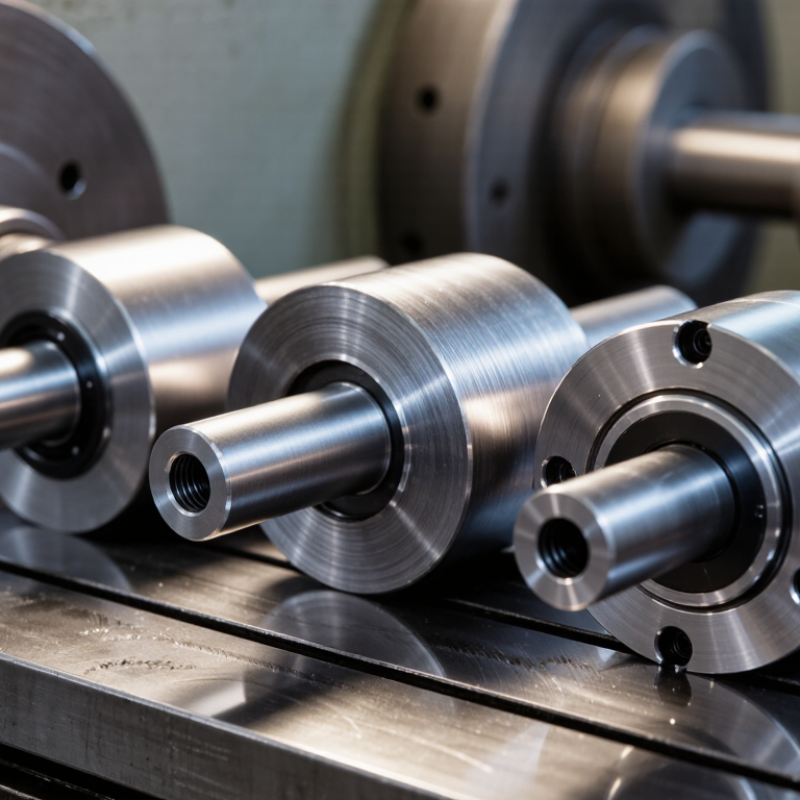
A spinning roller faces repeated contact, sliding friction, impact, and localized heating. Define these loads before choosing a steel grade. Record roller diameter, forming speed, workpiece material, contact pressure, lubrication, and expected production cycles. Hardness is not the only target. Many cold-forming rollers use approximately 58–62 HRC, but excessive hardness can reduce toughness and increase edge chipping.
Surface wear deserves close attention. The USGS Mineral Commodity Summaries 2025 reported about 81,000 metric tons of global tungsten mine production in 2024. Tungsten-bearing tool steels can improve wear resistance, but they may require careful heat treatment and longer machining times. The World Steel Association’s World Steel in Figures 2025 recorded approximately 1.88 billion tonnes of crude steel production in 2024. That scale reflects the demanding service environment for forming tools.
Look for balanced properties, not impressive chemistry alone. ASTM A681 provides a useful framework for tool-steel classifications, while the final decision should follow actual roller testing. Measure hardness after heat treatment, inspect the working radius, and check dimensional change. The heat-treatment process matters greatly. A well-selected grade can still fail after poor quenching or uneven tempering.
A practical trial may compare two grades under identical loads. Monitor wear scars, surface transfer, cracking, and roller runout after a fixed production interval. I would also question any specification copied from another machine. Different speeds and lubricants can reverse the expected result. Small details matter.
Choosing tool steel for spinning rollers requires more than checking its hardness rating. In workshop trials, harder rollers often kept their shape against abrasive sheet surfaces. However, excessive hardness made some edges chip under impact. Toughness matters when the roller meets a weld, dent, or sudden load. A balanced steel can absorb that shock without losing its working profile. That balance is easy to underestimate.
Wear resistance controls service life during repeated forming cycles. Look for stable performance after heat treatment, not only a high laboratory value. A roller with strong wear resistance should maintain its grooves, contact radius, and surface finish. Hardness supports this performance, but it does not replace toughness. Temperature, lubrication, load, and material thickness also change the result. Real production conditions can expose weaknesses quickly.
Tips: Match hardness to the actual forming load. Use tougher steel for interrupted contact or accidental impacts. Inspect the roller after every trial batch. Measure edge rounding and surface marks, not just visible cracks. If wear appears uneven, review alignment and lubrication before changing the steel. I have seen material selection blamed for problems caused by poor setup. That lesson is worth remembering.
Choosing tool steel for spinning rollers starts with contact conditions, not popularity. A roller shaping stainless sheet may face sliding wear, edge pressure, and repeated impact. D2 offers strong wear resistance after heat treatment, making it suitable for abrasive sheet and long production runs. However, its lower toughness can expose cracks around sharp grooves. A2 provides a more balanced response. It suits general cold-work rollers where dimensional stability matters. I have seen small radii fail when hardness was prioritized too aggressively. That detail is easy to miss.
H13 fits warm or hot spinning work, especially when roller surfaces face elevated temperatures. Its toughness helps resist thermal fatigue, but it will not match D2 in abrasive wear. M2 can serve high-speed, high-load applications, yet its cost and heat-treatment sensitivity demand tighter process control. O1 remains practical for limited batches and simple profiles. It is easier to machine before hardening. Still, distortion can become troublesome. Keep it honest. Grade names alone do not guarantee performance. Evaluate roller diameter, sheet thickness, forming speed, lubrication, and maintenance intervals. Verify hardness through documented testing, not assumptions.
A reliable evaluation includes impact checks, hardness mapping, and inspection of the working radius. Polishing matters because a rough track can mark the sheet and accelerate wear. For many shops, A2 is a sensible baseline, while D2 or H13 earns its place under specific stresses. I would avoid selecting M2 simply because it sounds stronger. Actual trials may reveal a different answer. Record failures, temperature, and surface condition after each run. That evidence is more useful than a generic catalog table.
| Tool Steel Grade | Typical Composition, wt.% | Typical Hardened Hardness | Key Performance Characteristics | Recommended Spinning Roller Applications | Main Advantages | Potential Limitations | Machinability Before Heat Treatment | Relative Selection Fit |
|---|---|---|---|---|---|---|---|---|
| A2 Air-Hardening Cold-Work Steel |
C: 0.95–1.05 Cr: 4.75–5.50 Mo: 0.90–1.20 V: 0.15–0.35 |
57–62 HRC | Balanced wear resistance, toughness, dimensional stability, and moderate corrosion resistance compared with plain carbon tool steels. | General-purpose spinning rollers for aluminum, low-carbon steel, stainless steel, and moderate production volumes where dimensional stability is important. | Good balance of toughness and wear resistance; air hardening reduces quench distortion; suitable for complex roller profiles. | Not as wear-resistant as high-carbon, high-chromium grades in highly abrasive service; requires careful grinding after hardening. | Good | Excellent general-purpose choice |
| D2 High-Carbon, High-Chromium Cold-Work Steel |
C: 1.40–1.60 Cr: 11.00–13.00 Mo: 0.70–1.20 V: 0.70–1.20 |
58–62 HRC | Very high abrasive-wear resistance and compressive strength, with lower impact toughness than A2 or S7. | High-volume rollers forming abrasive or work-hardening materials, including stainless steel and nickel-containing alloys, when roller wear is the primary concern. | Long service life under abrasive wear; good edge retention; strong resistance to plastic deformation. | Relatively brittle under shock or interrupted loading; difficult to machine and grind; carbide network can reduce toughness. | Fair | Best for severe wear |
| H13 Chromium Hot-Work Tool Steel |
C: 0.32–0.45 Cr: 4.75–5.50 Mo: 1.10–1.75 V: 0.80–1.20 |
44–52 HRC | Excellent thermal-fatigue resistance, toughness, and resistance to softening at elevated temperature. | Heated spinning or flow-forming rollers, hot metal-forming operations, and applications involving repeated thermal cycling or elevated workpiece temperature. | Maintains useful strength at high temperature; resists heat checking; good toughness and shock resistance. | Lower room-temperature wear resistance than D2 or M2; may require surface hardening or a wear-resistant coating for abrasive cold work. | Good | Best for hot or thermally cycled work |
| M2 High-Speed Tool Steel |
C: 0.78–0.88 W: 5.50–6.75 Mo: 4.50–5.50 Cr: 3.75–4.50 V: 1.75–2.20 |
60–65 HRC | Very high hardness, strong wear resistance, and good hot hardness; toughness is lower than A2 and S7. | Small or heavily loaded rollers requiring high surface hardness, high-speed contact, or extended wear life, provided impact loading is limited. | Excellent resistance to abrasive and adhesive wear; retains hardness better than conventional cold-work steels at elevated temperature. | Higher material and processing cost; sensitive to grinding damage; can chip under impact or misalignment. | Fair to poor | Premium wear-focused option |
| S7 Shock-Resisting Tool Steel |
C: 0.45–0.55 Cr: 3.00–3.50 Mo: 1.30–1.80 V: 0.15–0.35 |
54–58 HRC | High impact toughness, good resistance to chipping, and adequate wear resistance for intermittent or shock-loaded service. | Rollers exposed to interrupted contact, vibration, misalignment, abrupt loading, or difficult setup conditions where fracture resistance is more important than maximum wear life. | Excellent toughness; good resistance to shock and cracking; suitable for heavy-duty tooling. | Lower wear resistance than D2, M2, and properly treated A2; may deform if used at excessive hardness or under very high compressive loads. | Good | Best for shock-loaded rollers |
| O1 Oil-Hardening Cold-Work Steel |
C: 0.85–1.00 Mn: 1.00–1.40 Cr: 0.40–0.60 W: 0.40–0.60 V: 0.15–0.30 |
58–62 HRC | Good hardness, wear resistance, and machinability, but greater heat-treatment distortion risk than air-hardening grades. | Low- to medium-volume spinning rollers with simple geometry, moderate loads, and controlled oil-quench heat treatment. | Generally economical; easy to machine in the annealed condition; capable of high hardness and good surface finish. | Oil quenching can cause distortion or cracking; less dimensionally stable than A2; not ideal for large or intricate rollers. | Very good | Cost-effective for simple rollers |
| P20 Prehardened Mold Steel |
C: 0.28–0.40 Cr: 1.40–2.00 Mn: 0.60–1.00 Mo: 0.15–0.35 |
28–36 HRC | Good machinability and dimensional stability in the supplied condition, but limited hardness and wear resistance. | Prototype or low-duty spinning rollers for soft materials, short production runs, and applications where rapid machining is more important than maximum service life. | Easy to machine; commonly supplied prehardened; low heat-treatment distortion when used without additional hardening. | Usually too soft for sustained contact with stainless steel, titanium, or abrasive alloys; poor choice for high-load production rollers. | Very good | Prototype and light-duty option |
Choosing tool steel for spinning rollers starts with the roller’s actual work, not a catalog hardness value. A thin roller forming stainless sheet faces sliding wear, edge chipping, and repeated contact pressure. A larger roller may need greater toughness because deflection and impact rise with diameter and load. Design details matter. Profile radius, wall thickness, groove depth, and support conditions change stress concentration.
Match steel properties to operating conditions. For cool, abrasive forming, a properly heat-treated cold-work grade can offer strong wear resistance. For warm forming, choose steel that retains strength and resists thermal fatigue during repeated heating and cooling. If moisture or aggressive coolant reaches the surface, corrosion resistance may influence service life. Higher hardness is not always better. An overly hard roller can crack at a sharp corner, while a softer one may develop a polished flat or material pickup.
In production trials, record contact temperature, line speed, load, lubrication, and failure location. These details help separate poor steel selection from misalignment or inadequate heat treatment. Inspect the first roller at short intervals. Fine scoring around the entry zone often signals sliding or contamination. I have seen operators chase hardness when the real problem was a rough mating surface. That mistake is expensive. A balanced specification should state the steel family, cleanliness, heat-treatment target, surface finish, and acceptance checks. Test coupons help, but they cannot fully reproduce vibration, bending, and coolant exposure. Final selection should follow measured conditions and be reviewed after actual forming runs.
Match steel selection to roller design and operating conditions
The chart compares representative heat-treated hardness ranges with approximate room-temperature thermal conductivity for commonly used tool steels. D2 is suited to abrasive, high-wear applications; A2 offers a more balanced combination of wear resistance and toughness; H13 is preferred for rollers exposed to thermal cycling or impact; and M2 provides high hardness and wear resistance when cutting or abrasive contact is severe. Actual performance depends on roller geometry, load, speed, lubrication, surface finish, and the selected heat-treatment process.
Values are representative engineering ranges rather than guaranteed material specifications. Confirm final values with the applicable material standard, supplier certificate, and heat-treatment results.
Choosing tool steel for spinning rollers starts with the service cycle, not a catalog hardness number. Record load, roller speed, strip temperature, contact pressure, and cooling intervals during production trials. ASM International guidance stresses uniform heating, controlled soaking, and distortion reduction for hardened tool steels. The 2022 U.S. Department of Energy Industrial Decarbonization Roadmap reports that process heating consumes about 51% of industrial energy. Furnace efficiency therefore affects both quality and operating cost. Use the selected steel’s specified austenitizing range, followed by a controlled quench and tempering cycle. Measure hardness at the core and working surface. Check retained austenite when dimensions drift after service.
Surface finishing should match the actual failure mode. A polished roller may reduce friction, but excessive polishing can hide grinding burns or soft patches. Shine can deceive. Establish a roughness range through strip trials, then verify it with a calibrated profilometer. Inspect circumferential marks under consistent lighting. Edge blending also matters, because sharp transitions can concentrate contact stress. The NACE IMPACT study estimated global corrosion costs at 3.4% of worldwide gross domestic product. Store finished rollers dry, protect exposed surfaces, and avoid fingerprints before installation.
Maintenance needs a short, repeatable log. Record roller diameter, roughness, hardness checks, temperature history, and visible scoring after each defined production interval. Use magnetic-particle testing when cracks are suspected, following the applicable inspection procedure. I have seen teams replace rollers too early because they tracked appearance, not wear rate. Trend measurements instead. Recheck the maintenance interval after changing strip material, line speed, or coolant. A reasonable schedule can still be wrong.
High hardness can resist abrasive sheet surfaces and preserve the roller profile. However, brittle edges may chip after impacts. Toughness matters too.
Choose tougher steel when contact is interrupted or impacts are possible. Welds, dents, and sudden loads can shock the roller. Balance matters.
Strong wear resistance helps preserve grooves, contact radius, and surface finish during repeated forming cycles. Laboratory values may not match production results.
Record forming load, roller speed, strip temperature, contact pressure, and cooling intervals. These details reveal weaknesses hidden by catalog data.
Use the steel’s specified heating range, controlled soaking, quenching, and tempering cycle. Measure hardness at the surface and core. Check dimensional changes later.
Establish a practical roughness range through strip trials. Verify it with a calibrated profilometer. Excessive polishing can hide grinding burns or soft patches.
Sharp transitions concentrate contact stress and may accelerate local damage. Blend edges carefully, then inspect circumferential marks under consistent lighting.
Record diameter, roughness, hardness, temperature history, and visible scoring at fixed production intervals. Trend measurements, rather than trusting appearance alone.
Review roller alignment, lubrication, strip material, line speed, and coolant conditions. Uneven wear may come from setup problems. I have seen this happen.
Use magnetic-particle testing when cracks are suspected, following the applicable procedure. Recheck the maintenance interval after process changes. A reasonable schedule can still be wrong.
Choosing the right tool steel for spinning rollers begins with defining the working requirements, including the metal being formed, production volume, roller size, contact pressure, temperature, and expected service life. The key question is: what type of tool steel is best for metal spinning rollers? The answer depends on balancing hardness, toughness, wear resistance, machinability, and resistance to chipping or deformation. Common grades should be evaluated according to their intended applications, with tougher steels suited to impact-prone operations and harder, wear-resistant grades preferred for demanding production environments.
Steel selection must also match the roller’s geometry, surface area, loading pattern, and operating conditions. A suitable heat-treatment plan can improve hardness and toughness while reducing the risk of distortion or cracking. Surface finishing, polishing, and optional protective treatments help minimize friction and improve workpiece quality. Finally, regular inspection, cleaning, lubrication, and timely refinishing are essential for maintaining roller performance and extending tool life.

ZRF Spinning