Choosing China’s top CNC spinning machines for sheet metal requires more than comparing prices, spindle speeds, or attractive brochures. Fabricators must match machine capability with real production demands. Material type matters. Aluminum, stainless steel, and mild steel behave differently during forming. Part diameter, wall thickness, profile depth, batch size, and tolerance requirements also shape the decision.
Professor Peter Groche, a recognized forming-technology researcher at TU Darmstadt, states, “A forming machine earns its value through repeatable results, not impressive specifications.” This principle is central when learning how to choose the right cnc spinning machine for sheet metal fabrication. A reliable machine should demonstrate stable force control, accurate tool positioning, rigid construction, and consistent results across repeated cycles. Ask suppliers for sample parts, dimensional inspection records, and factory acceptance details. A polished demonstration may hide practical weaknesses.
Look closely.
Check the control system, servo response, tooling compatibility, safety features, training support, and spare-parts availability. Visit the manufacturer when possible. Watch an operator produce several identical parts, not only one perfect sample. Review maintenance records and talk with existing users. Their experience can reveal delays, software problems, or difficult service communication.
Some buyers focus too heavily on maximum diameter. That can be a mistake. A machine with excessive capacity may consume more energy and floor space than necessary. However, choosing the cheapest model can create costly rework later. The “best” choice is not always obvious. Careful comparison, realistic testing, and honest reflection on future production needs usually lead to a stronger investment.
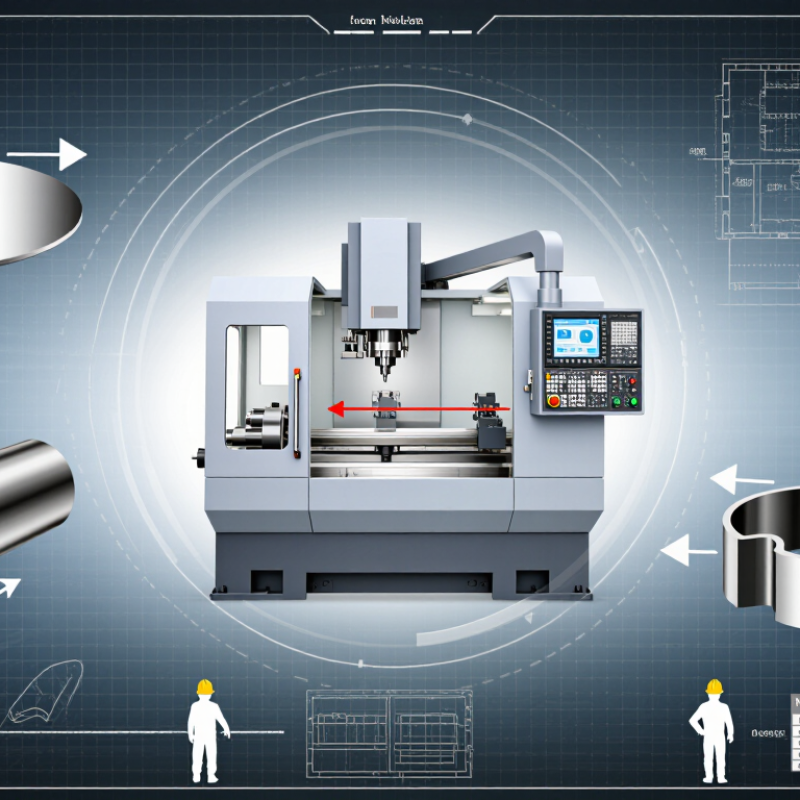
Choosing China’s top CNC spinning machines for sheet metal starts with understanding the process, not comparing prices alone. A CNC spinning machine clamps a circular blank against a mandrel. A controlled roller then forms the metal gradually. This suits cones, hemispheres, tubes, and other rotational parts. The machine must match your material, diameter, thickness, and production volume.
Check spindle torque, forming force, axis travel, and positioning accuracy. Aluminum, stainless steel, and mild steel behave differently during forming. A machine designed for thin aluminum may struggle with thicker stainless steel. Ask for sample parts made from your actual material. Inspect wall thickness, surface marks, roundness, and dimensional repeatability. These details reveal more than a polished specification sheet.
Control software also matters. Clear programming reduces setup errors and helps operators adjust roller paths. Automatic lubrication, guarding, emergency stops, and overload protection should be documented. Request electrical drawings, maintenance schedules, training plans, and spare-part availability before purchase. Factory acceptance testing can expose vibration, noise, or unstable feeding. I have seen buyers focus on maximum diameter and overlook tooling rigidity. That mistake becomes expensive.
A practical comparison should include tooling cost, installation support, delivery conditions, and long-term service response. Verify calibration records and ask how accuracy is checked after installation. A short production trial is valuable, though it may not represent every future condition. Leave room for uncertainty. Metal forming is sensitive to material batches, tooling wear, and operator settings. The best choice is a balanced machine that delivers repeatable parts, safe operation, and measurable support.
Understanding CNC Spinning Machines for Sheet Metal
Material strength is an important factor when selecting a CNC spinning machine. Higher-strength materials generally require greater spindle torque, machine rigidity, forming force, and tool stability. The values below are representative room-temperature yield-strength figures for commonly processed sheet metals; the actual requirement also depends on sheet thickness, workpiece diameter, alloy or temper, tooling, and production volume.
Choosing China’s top CNC spinning machines starts with production facts, not catalog rankings. Define the blank diameter, metal type, thickness range, part depth, and monthly volume. A machine for aluminum lighting shells differs greatly from one forming stainless-steel pressure housings. Grand View Research estimated the global metal forming machine market at approximately USD 16 billion in 2023, showing strong demand for flexible forming equipment. However, market growth does not prove that every machine suits your process.
Build the specification around measurable performance. Check maximum blank diameter, spindle torque, forming force, speed range, tool-change time, and control-system compatibility. Ask for test results using your actual material and geometry. ISO 230-2 provides methods for evaluating positioning accuracy and repeatability in machine tools. These figures matter when a flange must remain within tight dimensional limits. Surface finish also deserves attention. A fast spindle may still produce wrinkles, thinning, or uneven walls. High speed alone is not performance.
Review the complete production system. Examine tooling rigidity, lubrication access, chip control, operator safety, software support, spare-part response, and training arrangements. The International Federation of Robotics reported over 541,000 industrial robots installed worldwide in 2023, reflecting broader factory automation and higher expectations for integration. Still, automation can expose weak forming parameters. The first capacity calculation may be wrong. Run a pilot batch, measure wall thickness at several points, record cycle time, and inspect rejected parts. Reliable purchasing depends on evidence, not promises.
| Evaluation Dimension | Typical Production Requirement | Recommended Machine Performance | Why It Matters | Verification Method |
|---|---|---|---|---|
| Workpiece Diameter | Small components: up to 500 mm Medium components: 500–1,200 mm Large components: above 1,200 mm |
Select a machine with a maximum spinning diameter at least 10–20% greater than the largest planned workpiece. | Additional capacity allows for tooling clearance, material springback, and future product development. | Compare the machine’s rated spinning diameter with the largest finished-part diameter and blank diameter. |
| Material Thickness | Aluminum: approximately 0.8–6 mm Carbon steel: approximately 0.8–4 mm Stainless steel: approximately 0.8–3 mm |
Specify a working range that covers the actual material grade, thickness, and required forming depth. Confirm capacity for both standard and high-strength materials. | Maximum thickness depends on material strength, diameter, geometry, tooling, roller force, and number of forming passes. | Request a trial run using the actual material and thickness rather than relying only on the rated maximum. |
| Material Types | Common materials include aluminum alloys, mild steel, stainless steel, copper, brass, and titanium alloys. | Use programmable forming parameters, suitable roller materials, adjustable force control, and compatible lubrication arrangements. | Different materials require different roller forces, spindle speeds, lubrication methods, and forming strategies. | Check sample results for surface quality, wall thickness, cracks, wrinkles, and dimensional stability. |
| Part Geometry | Conical, hemispherical, parabolic, cylindrical, stepped, and flanged components. | Choose a CNC system capable of multi-axis interpolation and storing repeatable programs for complex profiles. | Complex profiles require coordinated movement between the spindle, slide, roller, and tailstock or support system. | Evaluate a sample part with the deepest profile, smallest radius, and most demanding flange or shoulder. |
| Spindle Speed | Typical working speeds vary with diameter, material, tooling, and process stage. | For many medium-sized sheet-metal applications, a programmable range of approximately 50–1,500 rpm is practical; high-speed requirements should be confirmed by process testing. | Lower speeds support heavy forming and large diameters, while higher speeds can improve productivity on smaller aluminum parts. | Check the speed range, torque curve, acceleration, braking performance, and stability under forming load. |
| Main Motor Power | Light-duty work may require approximately 5.5–15 kW; medium and heavy forming commonly require higher power. | Select motor power according to material strength, blank diameter, thickness, forming depth, and production cycle. | Insufficient power can cause speed loss, poor dimensional control, overheating, and unstable forming. | Review rated power, continuous-duty capability, overload protection, and actual power consumption during a forming trial. |
| Forming Force | Required force depends on material yield strength, thickness, tool radius, feed rate, and deformation ratio. | Use a hydraulic or servo-controlled system with adequate force margin and stable pressure or load feedback. | Stable forming force helps prevent tearing, wrinkling, uneven wall thickness, and roller deflection. | Confirm maximum roller force, continuous force, force-control accuracy, and overload protection. |
| Number of Controlled Axes | Basic parts may need two or three controlled axes; complex profiles may require three to five or more axes. | For flexible production, consider CNC control of spindle rotation, roller feed, radial movement, and auxiliary support axes. | More coordinated axes can reduce manual intervention and improve repeatability on complex parts. | Inspect the actual axis configuration, interpolation functions, servo resolution, and available program formats. |
| Positioning Accuracy | General sheet-metal spinning often requires repeatable tool positioning within a fraction of a millimeter. | Target positioning accuracy and repeatability suitable for the drawing tolerance, commonly around ±0.02–±0.10 mm for controlled axes, subject to machine size and process conditions. | Accurate positioning improves profile consistency, flange dimensions, and batch-to-batch repeatability. | Request a machine accuracy report and measure several trial parts using calibrated inspection equipment. |
| Wall Thickness Control | Critical parts may require controlled thinning, near-constant wall thickness, or a defined thickness distribution. | Use programmable feed rates, multiple forming passes, rigid tooling, and measurement feedback where required. | Excessive thinning can reduce strength and cause rejection, especially in pressure, lighting, automotive, and aerospace components. | Measure wall thickness at multiple locations with ultrasonic or mechanical gauges and compare it with the drawing specification. |
| Production Volume | Prototype: 1–20 pieces per batch Small batch: 20–500 pieces Mass production: above 500 pieces |
For frequent production, prioritize automatic program loading, quick setup, tool presetting, in-process monitoring, and stable cycle times. | Automation features reduce setup labor and improve cost efficiency as production volume increases. | Compare setup time, cycle time, program repeatability, operator requirements, and scrap rate. |
| Cycle Time | Cycle time varies widely with diameter, material, forming passes, trimming, and inspection requirements. | Establish a target cycle time from the complete process, including loading, forming, unloading, and quality checks. | A fast spindle alone does not guarantee high productivity if setup, tool changes, or manual handling are slow. | Conduct a timed production trial using the intended blank, tooling, program, and operator workflow. |
| Tooling Compatibility | Tools may include mandrels, rollers, tailstock supports, trimming tools, and custom forming fixtures. | Confirm compatible tool dimensions, mounting interfaces, roller adjustment range, and quick-change options. | Tool compatibility directly affects changeover time, attainable geometry, and production flexibility. | Check tooling drawings, mounting dimensions, interference clearances, and availability of standard accessories. |
| Surface Quality | Visible parts may require low marking, low roughness, and no cracks, folds, or roller scratches. | Use rigid machine construction, smooth servo motion, suitable roller geometry, lubrication control, and properly finished tools. | Surface defects can make parts unsuitable for painting, polishing, sealing, or direct customer-facing applications. | Inspect trial parts visually and, where necessary, measure roughness and check for surface deformation under defined lighting. |
| Machine Rigidity | Heavy materials and large diameters create significant radial and axial loads. | Prioritize a rigid bed, low-deflection slide system, stable spindle bearings, and reinforced frame construction. | Rigidity supports dimensional accuracy, reduces vibration, and helps maintain consistent wall thickness. | Observe vibration, tool deflection, noise, and dimensional changes during a maximum-load or representative-load test. |
| CNC Control and Programming | Operators may need to create, edit, store, and recall programs for multiple part families. | Choose an intuitive control interface with recipe management, simulation or graphic guidance, USB or network transfer, and password-based access control. | Clear programming reduces operator error and shortens the learning curve during product changeover. | Ask the supplier to demonstrate program creation, editing, backup, recovery, and alarm handling. |
| Automation Level | Manual loading may suit prototypes; repetitive production benefits from assisted loading, automatic lubrication, or robotic handling. | Match automation to blank weight, production volume, labor availability, and required takt time. | Appropriate automation improves safety, consistency, and labor productivity without adding unnecessary complexity. | Calculate return on investment using labor hours, output, changeover frequency, and maintenance requirements. |
| Safety Systems | Spinning machines involve rotating blanks, moving rollers, hydraulic pressure, and sharp sheet-metal edges. | Require guarding, emergency stops, interlocks, overload protection, safe access, and clearly documented operating procedures. | Safety functions protect operators and help support compliance with applicable workplace and machinery regulations. | Review the risk assessment, safety circuit design, guarding layout, emergency-stop response, and user manual. |
| Maintenance and Serviceability | Routine tasks include lubrication, hydraulic inspection, electrical checks, tooling inspection, and software backup. | Prefer accessible service points, standard components, diagnostic alarms, maintenance schedules, and readily available replacement parts. | Good serviceability reduces downtime and improves the machine’s operating life. | Request the preventive-maintenance plan, spare-parts list, troubleshooting guide, and expected response process. |
| Acceptance Criteria | Acceptance should cover dimensional accuracy, surface quality, wall thickness, cycle time, safety, and documentation. | Define measurable criteria before ordering, including sample quantity, material specification, tolerance, and repeatability. | Clear acceptance criteria reduce disputes and ensure that the machine meets the intended production purpose. | Use a written factory acceptance test and site acceptance test based on approved drawings and production samples. |
Choosing a Chinese CNC spinning machine starts with the manufacturer, not the machine’s polished exterior. During factory visits, inspect machining areas, assembly records, and final testing procedures. Ask how long critical components have been qualified. Request production samples using your sheet metal, thickness, and required diameter. Test it live.
Quality standards should support measurable performance. Check whether the manufacturer maintains ISO 9001 procedures and supplies complete inspection records. Review spindle runout, forming repeatability, hydraulic pressure stability, and control-system accuracy. Ask for material certificates and factory acceptance testing. A machine may look precise, yet produce uneven rims after several hours.
Technical support often separates a reliable supplier from a difficult purchase. Confirm response times, spare-parts availability, installation guidance, and operator training. Remote diagnostics can reduce downtime, but only when manuals are clear and technicians understand your process. Request videos of similar applications, not generic demonstrations. I have seen buyers focus too heavily on price and overlook training costs. That decision can become expensive. Leave room for honest discussion about limitations, software updates, and maintenance skills. The best evaluation is practical, documented, and slightly skeptical.
Choosing China top CNC spinning machines for sheet metal requires more than comparing catalog prices. Start with forming capacity: maximum diameter, sheet thickness, spindle torque, axis travel, and frame rigidity. A machine should produce a clean aluminum or steel component without visible waviness. Ask for test parts made from your actual material. Factory videos are useful, but they can hide setup time and finishing work.
Automation changes the buying decision. Automatic loading, tool changing, lubrication, and part measurement can reduce operator effort. Closed-loop sensors also help maintain wall thickness during long production runs. However, advanced automation is valuable only when your order volume justifies it. For small batches, a simpler control system may be easier to adjust and repair. Keep operators involved. Fully automatic production is not always better.
Total cost includes more than the machine invoice. Include tooling, delivery, installation, training, software updates, energy use, maintenance, spare parts, and production downtime. Check the availability of local technical support and clear electrical documentation. Compare the expected cost per finished part, not only the purchase price. A cheaper machine may consume more material through rejected parts. That hurts. Review warranty terms carefully, and request a written response-time commitment. My own evaluations have shown that small details, such as chuck access and chip removal, can influence daily productivity more than impressive specifications. Some assumptions will be wrong; measure them during a supervised trial.
Selecting a CNC spinning machine for long-term production requires more than checking maximum diameter. Grand View Research valued the global CNC machine market at about USD 88.6 billion in 2023. Its report also forecasts steady growth through 2030. This signals stronger demand, but market growth does not guarantee machine reliability.
Start with your actual parts. Test the machine using your sheet thickness, alloy, blank diameter, and forming depth. Watch spindle load, servo response, roller movement, and surface marks during repeated cycles. Ask for documented positioning accuracy and repeatability tests, preferably following ISO 230-2 principles. A polished sample is not enough. Run at least several dozen parts.
Energy and maintenance deserve equal attention. The International Energy Agency reports that motors consume a large share of industrial electricity worldwide, so efficient drives can reduce long-term operating costs. Request measured power data, not optimistic estimates. Check lubrication access, control cabinet cooling, spare-part availability, and technician response time. A machine with lower purchase cost may become expensive after repeated stoppages.
I would also inspect the software interface personally. Small usability problems become daily production losses. Review tool-change time, alarm records, recipe storage, and operator training. A supplier should provide a clear acceptance checklist and production trial. No machine is perfect. Your own material tests may reveal weaknesses that brochures never show.
Inspect machining areas, assembly records, and final testing procedures. Look for clean records and traceable inspections. Do not trust polished surfaces alone. Photos can mislead.
Use your own sheet thickness, alloy, blank diameter, and forming depth. Run several dozen repeated parts. Watch spindle load, servo response, roller movement, and surface marks. Test it live.
Request inspection records, material certificates, and factory acceptance testing documents. Check spindle runout, forming repeatability, hydraulic pressure stability, and control accuracy. Ask whether procedures follow ISO 9001 and ISO 230-2 principles. Compliance does not guarantee flawless production.
A machine may form one accurate part, then produce uneven rims after hours. Repeatability shows whether results remain stable across cycles. Measure positioning accuracy under realistic production conditions. Numbers need context.
Confirm response times, spare-parts availability, installation guidance, and operator training. Ask for clear manuals and remote diagnostic procedures. Request videos of similar applications, not generic demonstrations. Support may sound strong before purchase.
Inspect the interface personally. Review alarm records, recipe storage, tool-change time, and operator training screens. Small usability problems can waste minutes every cycle. Those minutes accumulate.
Request measured power data instead of optimistic estimates. Check efficient drives, lubrication access, cabinet cooling, and replacement-part availability. Include training, maintenance, and stoppage costs. The cheaper machine may not stay cheap.
Include material tests, dimensional results, repeatability data, surface inspection, and production-trial records. Define response times and training deliverables before delivery. Leave room to document limitations honestly. I would still keep a skeptical eye.
Choosing the best CNC spinning machine for sheet metal fabrication begins with understanding how the equipment forms, stretches, and finishes metal components. Define your production goals first, including material types, thickness ranges, part diameters, required accuracy, batch sizes, and future capacity needs. These factors determine the machine’s spindle power, forming force, working dimensions, control system, and level of automation. A clear assessment helps answer the question of how to choose the right cnc spinning machine for sheet metal fabrication without paying for unnecessary capabilities.
Next, evaluate manufacturers based on engineering experience, quality control, component reliability, safety compliance, installation guidance, training, and after-sales technical support. Compare manual, semi-automatic, and fully automated configurations, while considering tooling flexibility, programming convenience, cycle time, maintenance requirements, energy use, and spare-part availability. The lowest purchase price may not provide the best value, so calculate total ownership costs over the machine’s expected service life. A well-matched CNC spinning machine should deliver stable performance, consistent product quality, efficient operation, and dependable support for long-term production growth.

ZRF Spinning